ABA Therapy That Listens to Your Child
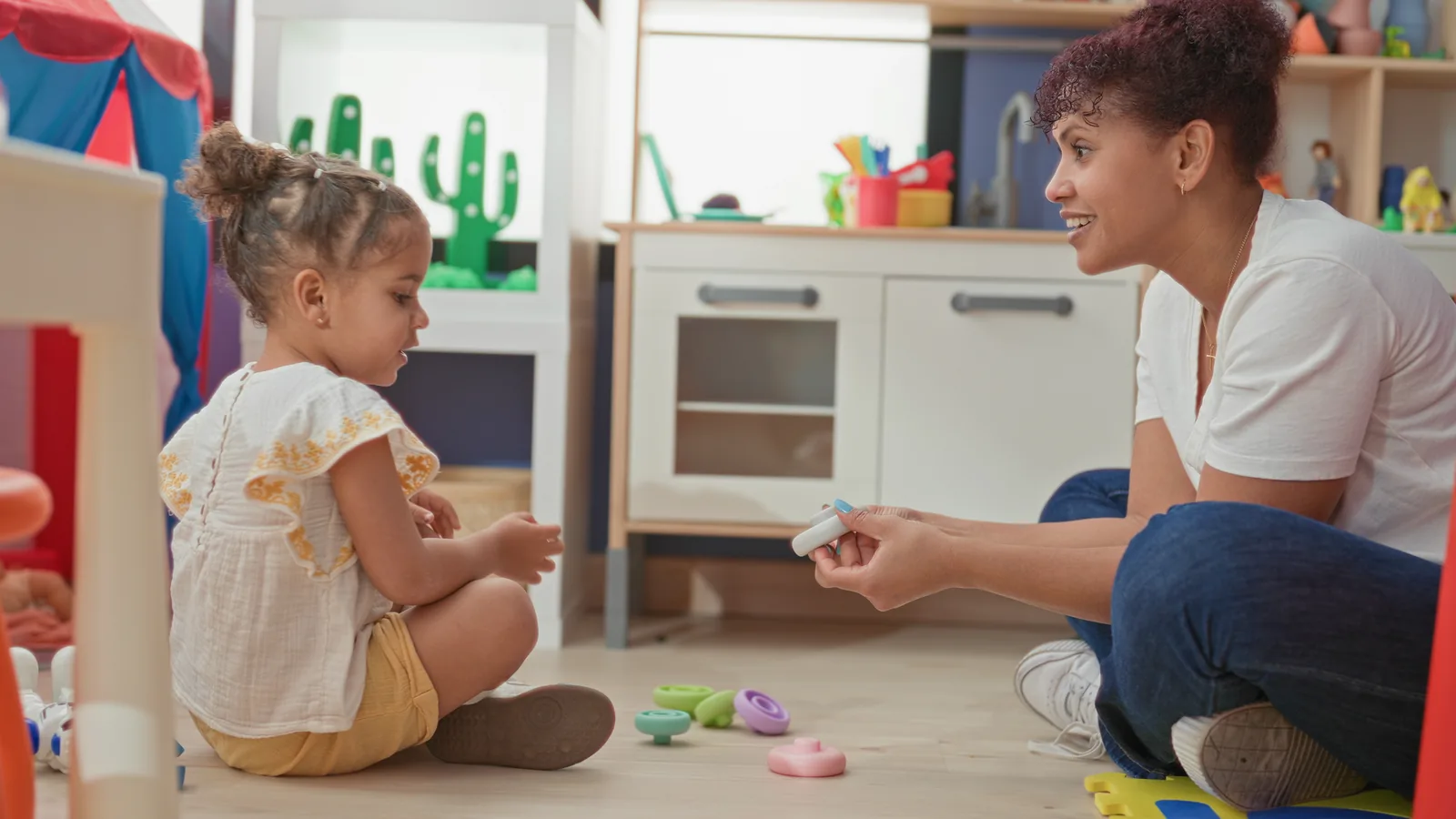
ABA at Rise Up looks like purposeful play, because it is. Sessions are built around what your child already loves, and every goal is one your family helped choose: communication, independence, safety, joy. Progress is measured, but never forced. If your child signals “no,” we honor it, adjust, and tell you.
What a session looks like
One therapist, one child, in a bright classroom-style space with peers nearby for natural social moments. Breaks, snacks, and quiet time aren't interruptions to the plan. They're part of it. At pickup you hear something real about the day, not just “fine.”
What we practice, and what we never do
We never work toward making your child “seem less autistic.” No eye-contact-for-its-own-sake goals. No suppressing harmless stimming. Goals are functional and family-defined, and your child's refusal is treated as communication, never as a behavior to eliminate.
How we practicePrograms within ABA
School Readiness
Group instruction, transitions, routines, circle time, music, art. Everything the first classroom asks of a child, practiced gently first. Full-day and half-day options.
Communication Skills
Requesting, labeling, back-and-forth conversation, in whatever form communication takes for your child (spoken, AAC, signs, gestures, pictures), coordinated with our speech team.
Toilet Training
A calm, positive-reinforcement approach, built with your family and continued at home with our support.
Parent & Caregiver Training
Part of every child's program. What works at our center should work at your kitchen table; we practice it with you, hands-on.
Practical details
- Ages 2–12
- Full/half-day scheduling
- After-school program for ages 6–12 with a signed IEP (BCCHP)
- Therapy intensity set clinically per child, never one-size-fits-all
- English y Español
Your team
BCBAs (Illinois-licensed LBAs) design and supervise every plan; RBTs deliver daily 1:1 sessions; speech and OT colleagues are down the hall, not across town.
Social Skills
Small groups (2–6 children) with 1:1 support inside the group: turn-taking, sharing, recognizing feelings, making friends.